

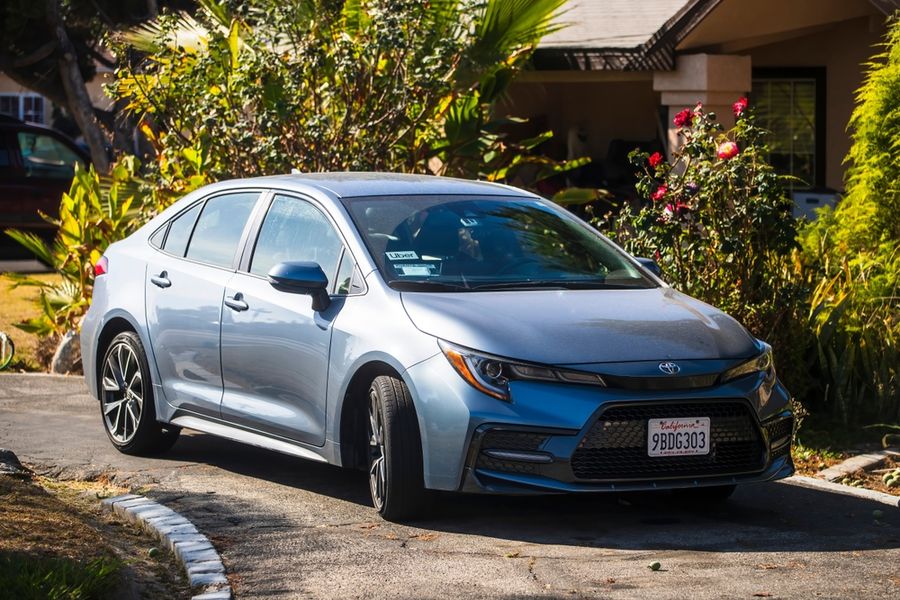
The Toyota Corolla has been a top-selling small car in the United States for decades, and many drivers think of it first when they need a daily commuter. With strong fuel economy, reliable build quality, and standard safety features, the Corolla often appears on shortlists for people who drive to work each day. But is it truly the best commuter vehicle on the road? The latest model gives drivers a few solid reasons to take a closer look.
Fuel Economy That Saves Money on the Daily Drive
For commuters who watch their gas budget, the Corolla's numbers stand out. The 2025 Corolla Hybrid LE and XLE earn EPA-estimated ratings of 53 city and 46 highway MPG, with a combined rating of 50 MPG. The Hybrid SE trim earns 50 city and 43 highway MPG, while the all-wheel drive Hybrid LE earns 51 city and 44 highway MPG.
Drivers who prefer a non-hybrid version still get strong numbers. The 2025 Corolla with the 2.0-liter four-cylinder gas engine earns up to 32 MPG in the city and 41 MPG on the highway. That same engine produces 169 horsepower, which is plenty for daily driving without feeling slow on the highway. For people stuck in city traffic each morning, the hybrid numbers can mean far fewer trips to the gas pump compared to a typical SUV or truck.
Standard Safety Features for Stop-and-Go Traffic
Daily commutes often involve heavy traffic and sudden stops. The 2025 Corolla helps drivers handle these situations with Toyota Safety Sense 3.0 (TSS 3.0), which Toyota lists as standard equipment on every Corolla trim.
The system includes a Pre-Collision System with Pedestrian Detection, Dynamic Radar Cruise Control, Lane Departure Alert with Steering Assist, Lane Tracing Assist, Automatic High Beams, and Road Sign Assist. The Pre-Collision System can apply automatic emergency braking if the driver doesn't react in time, and Dynamic Radar Cruise Control helps maintain a set distance from the car ahead, which is especially useful on highway commutes.
Beyond TSS 3.0, the Corolla also comes with Toyota's Star Safety System, which includes anti-lock brakes, traction control, and stability control.
A Cabin Built for Daily Driving
The Corolla is small on the outside but offers useful space for a daily driver. Its sedan trunk holds 13.1 cubic feet of cargo, while the hatchback offers 17.8 cubic feet behind the rear seats, or up to 23 cubic feet with the available Enhanced Cargo Space option.
The 2025 Corolla has an EPA passenger volume of 88.6 cubic feet. The 60/40-split folding rear seats let drivers carry larger items when needed, and the wide hatch opening on the hatchback simplifies loading and unloading. For most commuters, that's enough space for a backpack, gym bag, groceries, and a few work items without feeling cramped.
Reliability That Rewards Long-Term Owners
Reliability is a big reason commuters often choose the Corolla. J.D. Power ranks the 2025 Corolla #4 among compact cars, and notes the model's long-running reputation for dependability. For a daily driver, that means fewer surprise repair bills and fewer days at the shop.
The Corolla is seen as one of the most reliable compact sedans on the road, citing data and rankings from multiple recent model years. For many U.S. drivers, that consistency is worth more than flashier features found on other small cars.
Easy Ownership With No-Fee Maintenance
The Corolla also includes ToyotaCare, a no-fee maintenance plan that covers factory-scheduled service for 2 years or 25,000 miles, whichever comes first. ToyotaCare includes oil changes, tire rotations, fluid level adjustments, and multi-point vehicle inspections.
The plan also includes 24-hour roadside assistance for 2 years with unlimited miles. That coverage includes battery jump-start, tire service, fuel delivery, lockout help, towing, and winching. For new owners, this means the first two years of routine commuting come with very few extra service costs.
How the Corolla Stacks Up Against Other Commuters
The Corolla's biggest commuter strengths are its hybrid fuel economy, its standard safety package, and its reputation for reliability. The Hybrid's 50 MPG combined rating in the LE and XLE trims is among the highest in its class. Standard TSS 3.0 across every trim removes the need to upgrade to a higher trim just to get advanced safety help.
There are tradeoffs. The sedan's 13.1 cubic feet of trunk space is less than what some compact crossovers offer, and Toyota notes that all-wheel drive is only available on certain Hybrid trims. Drivers who need to carry tools, large gear, or multiple passengers may find the Corolla a bit tight. But for the typical solo commuter or small family, the size is often enough for daily routines.
A Strong Pick, But Not for Every Driver
The Toyota Corolla checks many of the boxes that matter most for commuters: high fuel economy, standard safety tech, useful cabin space, strong reliability, and no-fee routine maintenance. It really is the ideal car for someone who prefers no-fuss reliability.
Whether it's the "ultimate" commuter is up to each driver. People who need more cargo room, all-wheel drive across all trims, or more cabin power may want a different choice. But for many U.S. commuters who want a simple, dependable, fuel-efficient daily car, the Corolla still earns its long-running reputation.