

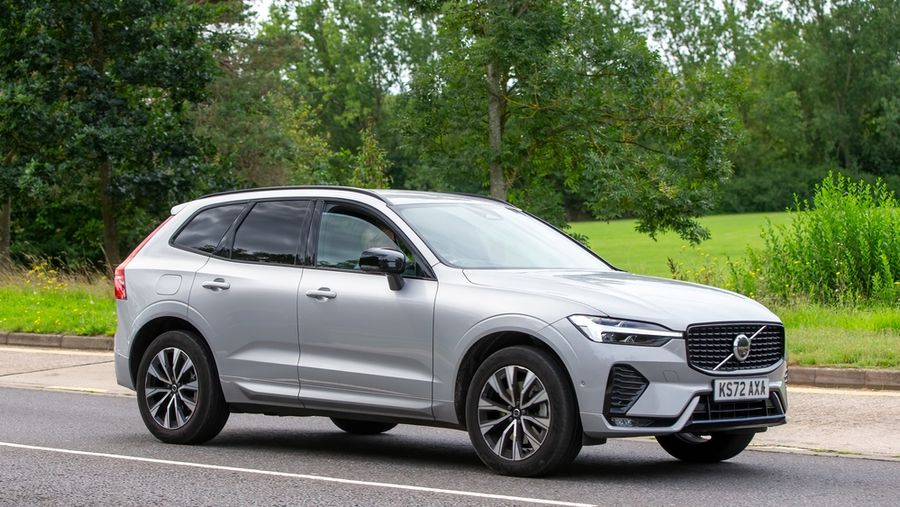
The Volvo XC60 has long been known for safety, and its driver assistance technology is a big part of that reputation. For everyday drivers in the United States, key features can make a real difference during the morning rush, parking lot trips, or long highway drives. The 2025 Volvo XC60 packs many helpful tools into one car. It's helpful to understand the most useful driver assistance features and how they work to keep drivers safer behind the wheel.
City Safety Watches the Road for You
City Safety is one of the most important driver assistance features in the XC60, and it comes standard on every 2025 model. The system uses radar and camera technology to detect vehicles, pedestrians, cyclists, and even large animals in the road ahead.
If you're curious how it operates, City Safety calculates the required braking 50 times every second. If the system detects that the driver isn't reacting in time, it automatically applies the brakes about 0.8 seconds before an impact. The system can help the driver avoid a collision entirely when the closing speed between vehicles is less than 9.3 mph, and it can lessen the impact at higher speeds.
For daily city driving, that means extra protection during low-speed traffic moments when distractions or sudden stops happen most often. It's especially useful in busy parking lots, neighborhood streets, and crowded downtown blocks where pedestrians may step into the road without warning.
Pilot Assist Helps With the Highway Drive
For longer commutes and road trips, the XC60's Pilot Assist is one of the most useful tools. The system is a semi-autonomous driving aid that helps with steering, acceleration, and braking on the highway. It works with adaptive cruise control to keep your XC60 a set distance from the car ahead while also gently steering to keep the car centered in its lane.
Pilot Assist also offers automatic lane-change support. When the driver signals to change lanes, the system checks the surrounding traffic and helps move the car over safely. On the 2025 XC60, Pilot Assist is offered as part of an option package, while it comes standard on some other Volvo models. For drivers who spend a lot of time on freeways, it can reduce fatigue and help with steady, smooth driving over many miles. The driver still needs to stay alert and keep hands on the wheel.
Blind Spot Help With BLIS and Cross Traffic Alert
Lane changes and parking lot exits are common points where accidents happen. The XC60 uses two related systems to help with these moments. Blind Spot Information System (BLIS) uses radar to monitor the lanes next to your XC60 and lights up a small symbol in the side mirror when another vehicle is in your blind spot.
BLIS also includes Steer Assist, which adds gentle steering resistance if the driver tries to change lanes while another vehicle is in the blind spot. Cross Traffic Alert (CTA) works in a similar way when backing out of a parking spot. The system uses radar to scan for vehicles approaching from the side and warns the driver before a possible crash. CTA may also pick up bicycles or pedestrians in some cases. Both systems are turned on by default at the start of every drive.
Steering Help When You Need It Most
Sometimes braking alone isn't enough to avoid a crash, and the XC60's steering support steps in to help. According to Volvo Cars Saint-Léonard, the XC60's City Safety system includes Steering Support, which works at speeds between about 31 and 62 mph. It helps the driver steer around an object that's suddenly in the road, like a stopped car, a pedestrian, or fallen debris.
Other lane-related driver aids include Lane Keeping Aid, which provides gentle steering input or a vibration warning if the car drifts out of its lane without a signal. These systems work together to help drivers stay in their lane and avoid sudden changes that could cause a crash on the highway. Combined, they form a safety net that activates only when the driver clearly needs help.
How These Features Lower Real-World Crashes
Driver assistance features are only useful if they actually prevent crashes, and there's strong evidence that the XC60's systems do. According to a research summary from the U.S. Department of Transportation's ITS Knowledge Resources, the deployment of the low-speed City Safety system on the XC60 led to a 15 percent drop in insurance claim frequency compared with similar vehicles. The S60 saw a 16 percent drop after the same system was added.
The Insurance Institute for Highway Safety also tested the 2025 XC60 and gave it "good" scores in three crashworthiness tests, though the model did not earn a Top Safety Pick award for the 2025 cycle. The crash-prevention performance is still well-rated overall, but drivers should know the award status.
Why the XC60 Stands Out for Daily Drivers
The 2025 Volvo XC60 brings together a strong set of driver assistance tools that match real driving situations. City Safety helps in stop-and-go traffic, Pilot Assist eases long highway drives, BLIS and Cross Traffic Alert reduce risk during lane changes and backups, and steering support helps avoid sudden hazards.
Crash data backs up the value of these systems. For U.S. drivers who want extra safety without making every drive feel like a tech demo, the XC60 puts useful, well-known driver assistance features to work in everyday life.