

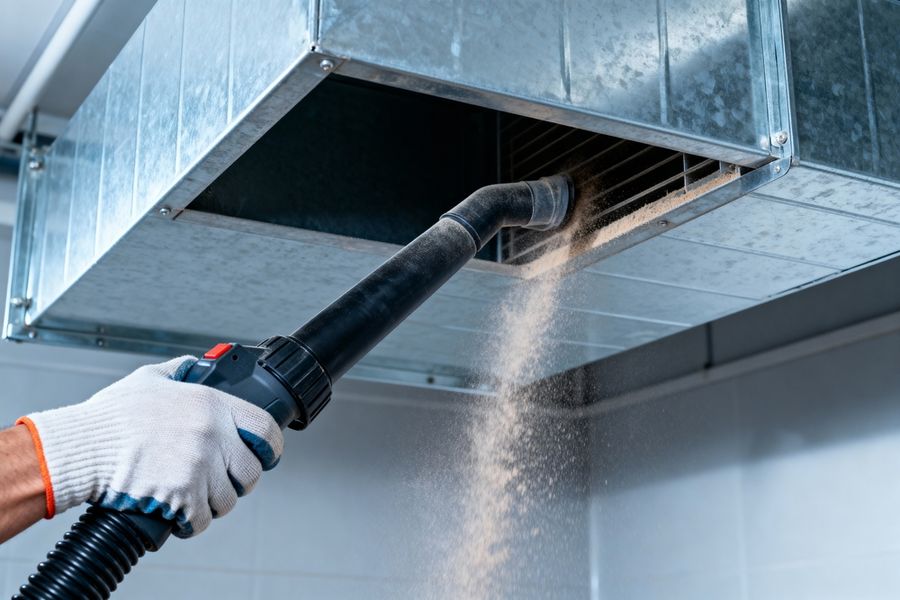
Most homeowners think about cleaning their floors, windows, and countertops — but the air ducts running through the walls and ceilings often get ignored. Your HVAC system works around the clock, circulating air through a network of vents and ducts. Over time, that network collects dust, debris, and other particles. Understand how a deep clean of your HVAC vents can make a real difference in both the air you breathe and the money you spend on energy bills.
What Builds Up Inside Your HVAC Vents
Think of your HVAC system as the lungs of your home. Every time it runs, air moves in and out through a series of ducts and vents, picking up whatever is floating around inside your house. Dust, pet dander, pollen, and other small particles get pulled into the system and settle on the interior surfaces of the ductwork. Over months and years, this buildup becomes thick and sticky — and it doesn't just sit there quietly.
As more debris piles up, it starts to block the smooth flow of air through the system. The ducts that are supposed to carry fresh, conditioned air to every room in your home become narrow and clogged. In some cases, mold can even begin to grow inside ducts — especially in areas where moisture is present. This is no longer just a cleanliness issue. It becomes a problem that affects your health and your wallet.
How Dirty Vents Affect the Air You Breathe
The air inside your home passes through your HVAC system many times each day. If the vents and ducts are full of dust and debris, that same air is essentially being filtered through a layer of buildup before it reaches the rooms where you live, sleep, and breathe. For people with allergies, asthma, or other breathing problems, this can make indoor air feel stuffy and irritating.
The U.S. Environmental Protection Agency (EPA) notes that if your vents have visible mold growth, evidence of a pest infestation, or are releasing noticeable dust and particles into your living spaces, cleaning is clearly needed (source). Cleaning your HVAC components properly may also help the system run more smoothly by removing debris from sensitive mechanical parts. The key word is "properly" — a professional with the right tools and training is the best person for this job (source).
The Connection Between Dirty Ducts and Higher Energy Bills
Your HVAC system is one of the biggest energy users in your home. When the ducts are clogged with dust and debris, the system has to work much harder to push air through those blocked pathways (source). That extra effort requires more power, and more power means a higher energy bill at the end of the month.
According to the U.S. Department of Energy, a large portion of the energy used to heat and cool a home is wasted — and a dirty, poorly maintained duct system is a major reason why (source). When your system runs longer cycles just to reach a set temperature, it is not just spending more energy — it is also putting extra wear and tear on its parts (source). Over time, that strain can lead to breakdowns and costly repairs that could have been avoided with regular upkeep.
When Should You Have Your Vents Professionally Cleaned?
Not every home needs duct cleaning every year, but there are clear signs that it is time to call a professional. The EPA recommends having your ducts inspected and cleaned if you can see mold inside the ducts or on other parts of the HVAC system, if there is evidence that rodents or insects have gotten into the ductwork, or if large amounts of dust are visibly blowing out of your vents when the system runs (source). If any of these things are happening in your home, waiting is not a good idea.
Even if none of those warning signs are present, regular maintenance habits can make a big difference. Changing your air filter every one to three months helps trap the dust and debris that would otherwise make their way deeper into the system (source). But even with regular filter changes, the inside of the ductwork still needs attention from time to time. A certified professional can inspect the whole system and clean it safely without causing damage (source).
Signs That Filters Alone Are Not Enough
Many homeowners assume that swapping out a dirty air filter is all that is needed to keep the HVAC system clean. Filters do an important job — they catch a lot of what floats through the air before it gets into the ducts. But they are not perfect, and they are not designed to catch everything.
Over time, dust and small particles sneak past even a fresh filter and settle on the walls of the ductwork. The longer a home goes without a professional cleaning, the more that material builds up and the harder the system has to work (source). Pairing regular filter changes with occasional deep cleaning by a trained technician is the most complete approach to keeping the system running well and the air in your home as clean as possible.
The Smart Investment You Did Not Know You Were Missing
Deep cleaning your HVAC vents is one of those home maintenance tasks that is easy to put off because the ducts are out of sight. But the effects of ignoring them show up clearly — in air that feels stale or irritating, in HVAC systems that struggle to keep up, and in energy bills that seem higher than they should be.
When your ducts are clean, air moves the way it is supposed to. Your system reaches the right temperature faster, runs less often, and puts less strain on its parts. That means better air quality for your family and lower costs over time. It is not a glamorous home project, but few maintenance tasks offer such a direct payoff in both comfort and savings. If it has been a while since your ducts were last cleaned — or if you are not sure they ever have been — now is a good time to find out.