

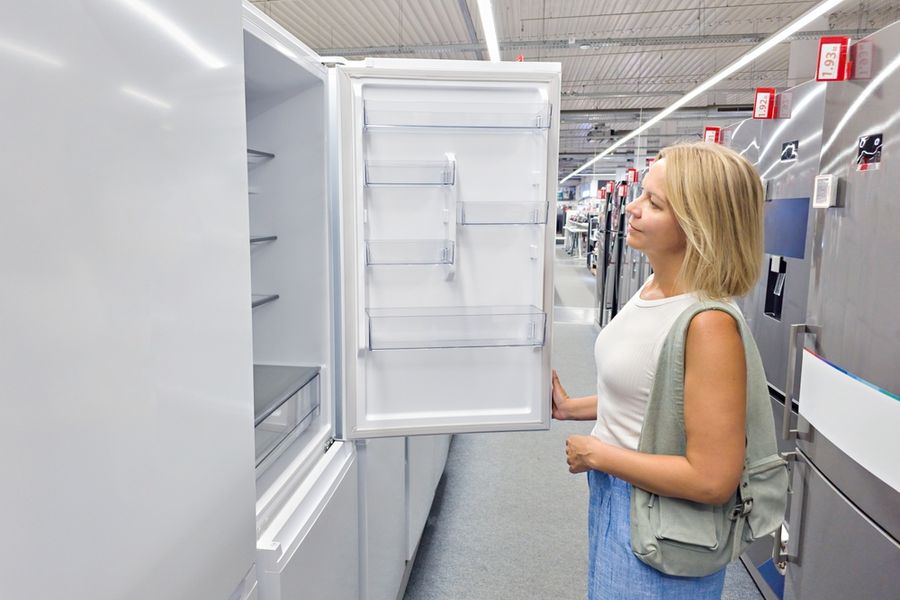
Buying brand-new isn't the only way to get a great appliance or gadget. Open-box items — products that have been returned or used as store displays — are sold at lower prices and are often in near-perfect shape. For shoppers looking to stretch their dollars without sacrificing quality, open-box deals can be a smart move. But not every category is worth the gamble. It's crucial to understand what you need to know before you shop.
What Is an Open-Box Item, Exactly?
An open-box product is one whose packaging has already been opened. This can happen for a number of reasons: a customer bought it and changed their mind, it was used as a showroom model on the store floor, or the box was damaged during shipping (source). In many cases, the item inside was never actually used for its intended purpose — meaning you could be getting something nearly identical to a brand-new product, just at a lower cost.
It's also worth understanding how open-box items differ from refurbished or "renewed" ones. A refurbished appliance or gadget has typically been used in someone's home, then repaired and tested before being resold (source). An open-box product, on the other hand, sits much closer to new — it simply isn't in sealed, factory-fresh packaging (source). That difference matters quite a bit when it comes to how much wear you should expect and what kind of warranty protection might come with it.
Which Appliances Give You the Best Value Open-Box?
Large appliances are often where open-box shoppers find the most worthwhile savings. Appliances end up in the open-box section for a handful of reasons: a customer returned an item because it was the wrong size or color, it was used as a floor display or showroom model, or it arrived with minor cosmetic damage. Refrigerators, washers, dryers, and dishwashers are among the most commonly found categories in open-box sections — and since these carry higher price tags when bought new, even a moderate discount adds up to meaningful savings (source).
Dishwashers are another category that consistently shows up in open-box inventory, often because a shopper changed their mind about the style or fit after purchasing. These kitchen and laundry essentials are among the easier items to inspect before you commit to buying — in many cases, a store employee can power the unit on so you can check it over. Open-box appliances across these categories are frequently priced between 10% and 40% below their normal retail cost, putting premium brands within reach for budget-conscious shoppers (source).
Electronics Worth Considering Open-Box
Televisions are among the best electronics to look for in the open-box section (source). A TV that was returned due to buyer preference — the wrong size for a room, the wrong style for a wall — may have never even been powered on. If you find one graded in excellent condition, you could be bringing home a near-new screen for considerably less than the full retail price.
Laptops, wireless earbuds, and gaming consoles can also be strong open-box buys, but they call for a little extra diligence. For laptops and phones especially, battery health is one of the most important things to check before buying (source). If a seller isn't able to share the battery's remaining capacity or cycle count, that's a sign to be cautious. Small kitchen appliances — mixers, espresso machines, and similar items — also tend to do well in the open-box market, since they're often returned simply because a buyer found a lower price elsewhere, not because anything was wrong with the product (source).
What to Check Before You Buy
Condition grading is one of the most useful tools available to open-box shoppers. Many major retailers use a tiered labeling system — typically categories like Excellent, Good, and Fair — to communicate the state of each item at a glance (source). An "Excellent" item works and looks like new, has been restored to factory settings, and usually includes all original parts and accessories. A "Good" item is fully functional but may show minor cosmetic wear and could be missing non-essential components. A "Fair" item may have more obvious flaws and could be missing certain accessories, though it has still been tested and confirmed to work (source).
Beyond the label, a hands-on inspection is always a smart move when possible. Look for dents, scratches, and missing items like chargers, remotes, or power cords (source). It's also worth confirming the return policy before you commit — many retailers apply the same return window to open-box items as they do to new purchases, but this can vary. Some open-box products still carry the original manufacturer's warranty, while others may come with a limited or store-specific plan — so it's always worth asking before you buy (source). If the gap between the open-box price and the full retail price is very slim — under 10%, for example — it may simply be smarter to buy new and skip any added uncertainty (source).
The Smart Shopper's Bottom Line
Open-box shopping rewards patience and a willingness to do a bit of homework. The strongest deals tend to come from large household appliances and higher-priced electronics, where discounts translate into real savings. There's also an environmental benefit to choosing open-box: giving returned products a second life means fewer items end up sitting unused in a warehouse or contributing to product waste (source).
That said, the open-box section isn't the right fit for every buyer. Inventory changes frequently, so you can't always count on finding the exact brand, model, or color you have in mind. But if you're flexible and willing to take a careful look at what's available, open-box deals are one of the most reliable ways to bring home quality appliances and electronics — without paying full price.