

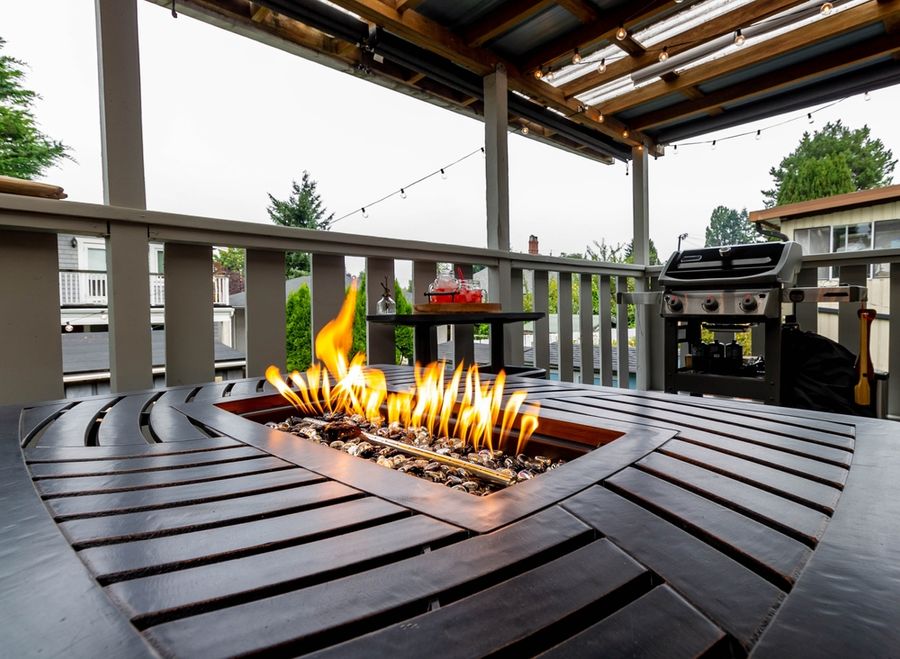
There's something about a flame that pulls people closer. An outdoor fire table puts that flame at the center of your patio, with seats already arranged around it, ready for conversation. It's part heater, part centerpiece, and part instant invitation to slow down. Whether you're hosting a Saturday dinner or just looking for an excuse to sit outside on a cool evening, a good fire table gives every gathering a reason to stay a little longer.
Why Fire Tables Become the Heart of the Patio
A fire table is a piece of outdoor furniture that doubles as a gathering point. Unlike a tucked-away fire pit, the table format puts the flame at coffee-table height, surrounded by space for drinks, plates, and elbows. Guests don't have to crouch toward a low pit or lean over flames — they can stay seated, set down a glass, and look across at someone instead of down at their phone.
That simple change in shape changes how people use the patio. The fire table becomes the natural place to land after dinner, the spot where conversations linger long past dessert. Add a few chairs, a soft blanket or two, and a string of overhead lights, and even a chilly evening turns into the kind of backyard hangout people remember. It's the closest thing a backyard has to a built-in icebreaker.
Picking Between Propane and Natural Gas
Most modern fire tables run on either propane or natural gas. Propane models use a standard 20-pound tank that hides inside the base of the table, which means you can put the table almost anywhere on your patio. Setup is easy — connect the regulator, turn the knob, and you're lit. The downside is that the tank runs out and needs to be swapped or refilled.
Natural gas tables connect to a permanent gas line and never run out, which is great for people who use the table often. The trade-off is installation: you'll need a licensed plumber to run the line, and once it's installed, the table can't move. If you don't already have a gas line in your yard, propane is usually the simpler starting point. Many fire tables come ready for both, with a conversion kit included or available separately.
Sizing Up BTUs and Heat Output
BTUs measure how much heat a fire table puts out. The number you want depends on how much space you're trying to warm and how cold your evenings get. Most propane fire tables fall in the 30,000 to 60,000 BTU range, which suits most home patios and small backyards.
A higher BTU rating means more heat, but it also burns through fuel faster. For a typical seating area where four to six people gather around the table, a mid-range model handles cool evenings comfortably. If your patio is larger or sits in a windy area, lean toward the higher end. Natural gas tables tend to run a little lower on the BTU scale than propane, so factor in your fuel type when comparing two models that look similar on the spec sheet.
Choosing the Right Surface and Fuel Media
Fire tables come in stone, concrete, metal, and faux-wood finishes, each with their own strengths. Stone and concrete handle heat well and feel substantial in a permanent patio setting. Powder-coated steel and aluminum are lighter and easier to move, while resin-wicker bases blend better with traditional outdoor furniture.
Inside the burner, you'll usually choose between fire glass and lava rock. Fire glass reflects the flame and gives the burner a polished, jewel-like look. Lava rock is the more rustic, natural option, often less expensive, and a good base layer that helps spread heat evenly across the burner. Some owners mix the two, using lava rock as a foundation and fire glass on top for the visual sparkle.
Popular Fire Table Models to Consider
A few models come up again and again in U.S. patios because they hit the sweet spot of price, build quality, and heat output. Here are two worth a closer look:
- Outland Living Series 403: One of the most common picks for first-time buyers. It runs 44 inches long, puts out 50,000 BTU on propane, hides a 20-pound tank inside the wicker-and-aluminum base, and ships ready to assemble in under an hour.
- Hampton Bay Crossridge: A Home Depot exclusive on the more budget-friendly end that has stayed popular for years. At 30 inches wide and 50,000 BTU, it's compact enough for a small patio or balcony, runs on a hidden 20-pound propane tank, and ships with lava rock and a spark screen included.
Safety and Smart Placement
A fire table is built to be safe, but placement still matters. General guidance is to keep gas fire tables a safe distance from any combustible structure, and to follow the minimum clearances in the manufacturer's manual. Wood-burning tables call for much greater clearance because of sparks and embers, and many local codes set their own required distances.
Always check your local fire code before you set up, since requirements vary by city and county. Keep the table on a flat, non-flammable surface like concrete, brick, or stone, and never run it under a low-hanging deck, eave, or awning.
A Centerpiece That Brings People Together
A fire table is one of those rare backyard upgrades where the form and the function work together. The flame keeps people warm, the table holds the food and drinks, and the whole thing becomes the natural meeting point of the patio. It earns its space by giving every gathering a reason to last a little longer.
Pick the fuel that matches your setup, the BTU range that fits your space, and a finish you'll still love five years in. Add seating, soft light, and good company, and your fire table will earn back its purchase price in evenings spent outside instead of in front of the TV. Some nights, that's all anyone really needs from a backyard.