

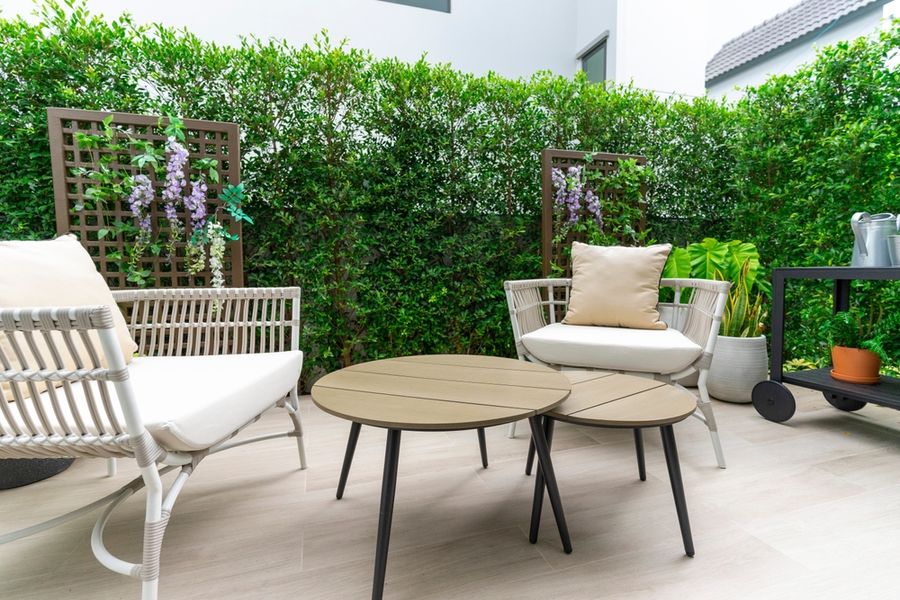
Small patios get a bad rap, but a well-planned little space can do almost everything a big one can. The trick is laying it out with intention. Every square foot has to work — for sitting, eating, plants, or storage — so you can move through the space without bumping into anything. With a few smart layout choices, even a tiny balcony or back-corner patio can feel open, useful, and worth spending hours in.
Start by Mapping Out Zones
Before you buy a single chair, decide what your patio needs to do. Most small patios serve two or three roles — a place to eat, a place to relax, and a place to grow plants or display décor. Sketch the space on paper or in a phone app, mark the doorways and any fixed features, and block off a zone for each role you want it to play.
Even in a small footprint of 60 to 80 square feet, you can carve out two distinct zones if you keep each one tight and purposeful. A two-person bistro set in one corner and a single chaise or pair of small chairs in another can work well together. Use an outdoor rug, a planter, or a low screen to mark where one zone ends and the next begins. The visual break actually makes the space feel bigger, not smaller.
Choose Furniture That Pulls Double Duty
In a tight space, every piece should earn its keep. A storage bench gives you seating and a hidden home for cushions, pool toys, or grilling tools. An ottoman can be a footrest, an extra seat, or a side table when topped with a tray. A folding bistro table can collapse against the wall when you need clear floor space for guests.
Look for stackable chairs and folding stools, since they tuck away when you're not using them. Modular sectionals work well too — sections can be split apart for parties or pulled together for movie nights under the stars. Aluminum, resin wicker, and powder-coated steel are good lightweight, weatherproof picks for materials. Skip the heavy hardwood pieces unless you have a sheltered space and don't plan to move them around often.
Build Up, Not Out
When floor space is limited, the walls and railing are your best friends. Vertical gardens, hanging planters, and wall-mounted shelves let you bring in plants and storage without taking a single inch from the floor. Trellises or fabric pocket planters can cover a blank wall with herbs, flowers, or small vegetables, and they double as a soft privacy screen.
Hooks and rail-mounted bars can hold lanterns, string lights, or hanging baskets at eye level, where they catch attention without crowding the seating below. A tall, narrow plant stand fits in a corner and adds height that makes the space feel layered rather than flat. Even a single climbing vine on a slim trellis adds a column of greenery without eating up your patio's footprint. The general rule: anything that can hang, mount, or climb should.
Keep Walkways Clear and Flow Open
One of the biggest mistakes in small spaces is cramming furniture into the middle. Push the bigger pieces to the edges and along the walls so the center stays open (Pottery Barn). You should be able to walk from the door to your seat without weaving around chair legs or planters. A small patio works best when the floor stays clear and the eye can travel from one zone to the next without bumping into clutter.
Aim for clear walking paths wide enough for one person to pass comfortably without brushing furniture. Keep the space between a dining chair and the wall open so you can pull the chair out and sit down without scooting. If your patio opens onto the lawn or a sliding door, leave that line of sight clear so the space feels connected to the larger view rather than boxed in. That continuity from indoors to out can make even the smallest space feel generous.
How to Choose the Right Patio Layout?
When you're working with a tight footprint, the layout you pick is half the battle. Two of the most popular options for small spaces are the bistro patio and the outdoor living room. A bistro patio borrows from café seating — usually a small round table and two to four chairs — and fits almost any narrow corner. An outdoor living room patio takes the opposite approach: a sectional or a pair of sofas, an outdoor rug, and a coffee table arranged the way you'd arrange your indoor den. Both feel intentional rather than crammed, which is the goal in any small space.
A courtyard garden patio is another strong choice if your space is naturally enclosed by walls, fencing, or the house itself. It pairs hardscape with planting to create a compact, private feel. If your yard has any slope at all, a multi-level patio can carve a small lot into two distinct zones — dining on one tier, lounging on another — without needing more square footage. Match the layout to the way your space already wants to flow, and the rest of the choices get easier.
Make Every Square Foot Count
A small patio doesn't have to feel cramped — it just has to be planned with care. The best small patios feel intentional, not crowded. Start with the activity you want most — coffee in the morning, dinner at night, a quiet reading spot — and design around that.
Once one zone works, the others tend to fall into place around it. Treat the patio like an extension of your living room rather than an afterthought, and it will start to feel like one. Done right, even the tiniest outdoor space can become the room you spend the most time in.